Welcome Incoming CCAPP Postdocs
We are excited to announce and welcome in the newest CCAPP Postdocs starting this fall 2026!
Federico Berlfein, Bill Chen, Hiram Herrera, Chloe Richards, Ce Sui, Claire Ye

Federico Berlfein
Federico Berlfein (Carnegie Mellon University) studies weak gravitational lensing cosmology, which uses the subtle distortions of galaxy images to measure how matter is distributed and how cosmic structure grows. Weak gravitational lensing represents one of the most powerful tools for testing the nature of dark matter, dark energy, and the physics driving the accelerated expansion of the Universe. At CCAPP, Federico will develop methods and necessary infrastructure needed to enable weak gravitational lensing and large-scale structure measurements with the Roman Space Telescope.
Bill Chen
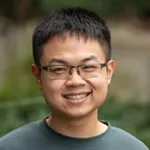
Yingtian "Bill" Chen (University of Michigan) combines computational and observational techniques to study globular clusters and stellar streams in the local Universe. These ancient stellar systems preserve fossil records from the earliest stages of galaxy formation. At CCAPP, Bill will use next-generation surveys from JWST, Roman, Rubin, and DESI to extract new constraints on how star clusters form, evolve, and disrupt over cosmic time.

Hiram Herrera
Hiram Herrera (CEA Paris-Saclay) uses the Lyman-alpha forest as a cosmological probe, measuring baryon acoustic oscillations at high redshift with the DESI collaboration. These measurements provide some of the most precise constraints on the expansion history of the Universe at z > 2, a regime largely inaccessible to contemporary galaxy surveys. At CCAPP, Hiram will work on the finalized DESI Lyman-alpha forest survey analysis, extend Lyman-alpha forest studies to Lyman-break galaxies in DESI-II, and explore the possibility of performing Lyman-alpha tomography with the DESI-II survey to extract new cosmological and astrophysical information about the high-redshift Universe.
Chloe Richards
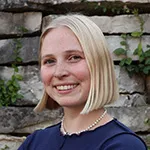
Chloe Richards (University of Illinois Urbana-Champaign) develops numerical relativity codes to study black hole evolution in scalar-field and dark-matter environments. Her simulations explore how black holes can serve as laboratories for probing new physics, as surrounding fields can influence black hole growth through accretion and impact the gravitational waves emitted during black hole mergers. At CCAPP and Kenyon College, Chloe will extend her numerical relativity framework to investigate open problems in cosmology, including the formation of primordial black holes.

Ce Sui
Ce Sui (Tsinghua University) works in cosmology, with a focus on applying machine learning and statistical methods to advance the analysis of cosmological data. This research helps maximize the scientific return from current and future cosmological surveys, deepening our understanding of the Universe and its underlying physics. At CCAPP, Ce will develop efficient inference and forward-modeling techniques for cosmological data analysis, enabling more accurate and scalable constraints on cosmological models.
Claire Ye
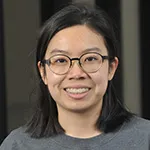
Claire (CITA) studies the formation and evolution of black holes and neutron stars by developing N-body simulation and binary evolution tools, and leveraging large-scale cosmological frameworks. Her research bridges the gap between multi-messenger phenomena and the complex dense star clusters and binary systems where these compact objects originate. At CCAPP, she will expand this work by connecting theoretical models with upcoming observational datasets, including data from high-energy transient and gravitational wave sources, to understand how stars evolve into black holes and neutron stars.
